Pivoting creative or freelance services and Filtering 'Shiny object' marketing Trends
Based on what you know about me, my business, and my goals, I'm going to share [number] business ideas or directions I'm considering. For each one, score it out of 10 against these three criteria: alignment with my strengths, market demand, and my personal energy for this idea. Present the results in a table and tell me which option you recommend I go all in on, and why. Ask for more detail if required.
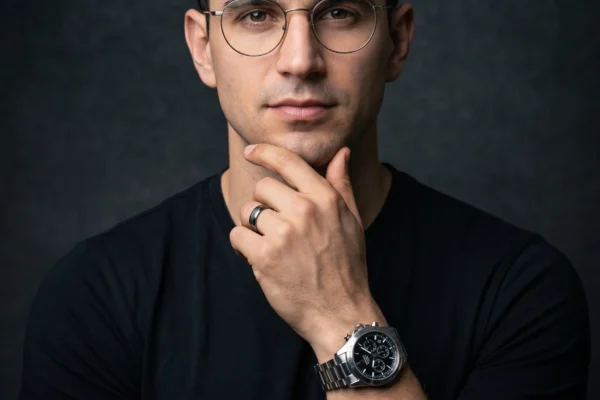
Corporate Headshot, LinkedIn Portrait and Professional Portrait
Create a professional chest-up portrait captures a composed figure in a confident thinker’s pose, with one hand resting against the chin and a steady gaze locked directly into the camera. The expression is calm, controlled, and intentional, while the slight body angle adds subtle depth without breaking the direct connection of the face.
The subject wears a fitted black crew-neck t-shirt with a clean matte finish that keeps attention on form and expression. Thin metal-framed glasses add a refined edge, sitting lightly on the face with subtle lens reflections that enhance realism without distraction. On the raised hand, a dark metallic wedding band and a bold stainless steel chronograph watch stand out as strong but minimal accents, reinforcing a polished and intentional style.
The background is a deep charcoal studio backdrop with a soft, textured tone and a gentle vignette effect that naturally draws focus toward the subject. Lighting is carefully controlled in a three-point studio setup, with a strong key light shaping the face and upper body, while soft shadows define the jawline and hand position, adding structure and depth.
Shot in a tight medium close-up using an 85mm lens, the image maintains a shallow depth of field that keeps the eyes and wrist details sharp while allowing the rest to softly fall off. The final look is crisp, high contrast, and visually disciplined, built around clarity, texture, and controlled lighting. Aspect ratio 4:5.
Viral style replication, Competitor video analysis, and Retention optimization
Act as a professional video editor and visual style analyst.
I will provide a reference video. Analyze it and extract its complete editing system across these dimensions:
Pacing: average shot length (seconds), rhythm pattern, cut frequency (cuts per 10 seconds)
Transitions: type, frequency, and exact context where each is used
Color grading: contrast level, saturation (low / medium / high with reference), temperature shift, overall mood
Sound design: BPM estimate, music vs SFX dominance (music-led / balanced / SFX-accented), impact placement timing
On-screen text: timing relative to cuts (frames), animation style, placement zone
Visual energy curve: hook timing, tension build range, payoff timestamp
Then convert your analysis into a replicable editing system I can execute in Premiere Pro or DaVinci Resolve.
Structure your output exactly like this:
1. Style Fingerprint
(6 bullet points, one per dimension above, include numbers wherever possible)
2. Timeline Blueprint
(break the video into timestamp segments, define exact editing actions + timing)
3. Replication Workflow
(numbered steps from raw footage to export, actions only, no explanation)
4. Retention Logic
(3 points: first 3 seconds, highest drop-off point, main attention driver)
5. Quick Fixes
(problem → fix format, cover: slow pacing, off-beat cuts, weak transitions)
6. Adaptation Rules
(how to adapt this style for: slower BPM (90–110), and cinematic/premium version)
7. Concept Mapping
(apply the system to my video concept: define shot sequence, timing, and key visual moments so the structure fits my content)
Rules:
- No generic statements
- No theory, only actionable decisions
- Use numbers only when they can be reasonably inferred from the video (timing, BPM, duration, frames). For all other cases, use relative but anchored descriptors (low / medium / high, subtle / aggressive, etc.). Do not fabricate precise values.
- Do not repeat information across sections
- If a value cannot be confirmed, provide the closest estimate with a confidence note (low / medium / high)
Do not introduce techniques, effects, or complexity that are not clearly present in the reference video. Stay faithful to the source style.
My video concept: [Insert your concept here]
Reference video: [Upload video]